

BEYOND CAMERAS: ANALYTICS, EFFICIENCY, AND INSIGHTS
The seven essential applications of AI video surveillance
Until recently, video surveillance was defined by one overriding capability: simple visual oversight of a protected area. Cameras could show what was happening, if there were live guards to watch their output, or provide video evidence to scrub through when a security event was later discovered or suspected.
That’s changed.
The deepest reason to deploy video surveillance has remained constant: to protect people and property. But incremental improvements, like increasing camera sensor sizes and light sensitivity, and radical ones — like artificial intelligence that automatically transforms video data into useful knowledge — have given surveillance entirely new abilities to meet that goal.
We’ve identified seven essential applications for video in today’s era of AI-backed surveillance.
Explore more: AI-backed surveillance in practice
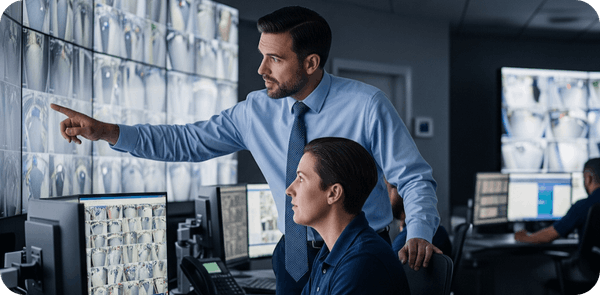
Remote Video Monitoring
Full-time live monitoring was once too expensive for all but the most critical applications. Today, cloud infrastructure makes secure video sharing simple, locally or around the world. And AI provides a crucial layer of filtering and triage, ensuring that only verified events are actually passed on for review.

PPE Detection
In contexts as varied as construction, energy production, and medical research, personal protective gear is a practical and legal requirement. Whether that means helmets, gloves, eye shields, or hearing protection, AI video surveillance can help document proper PPE use or spot violations of PPE protocol.
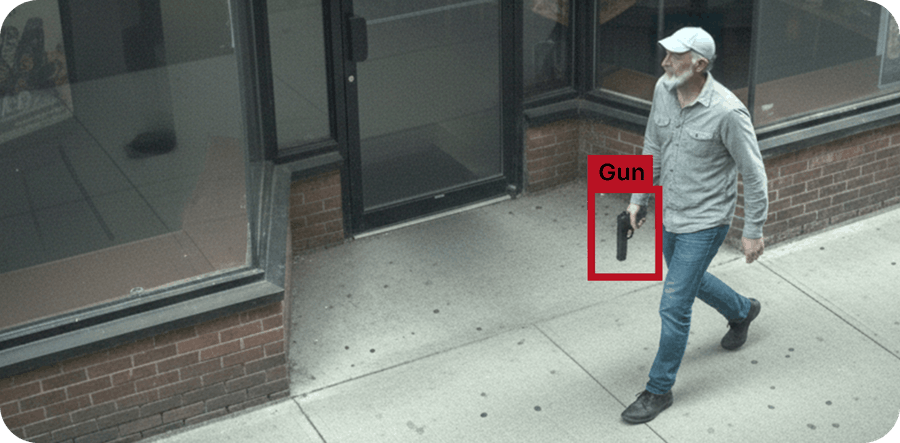
Gun Detection
Advancements in algorithms, training data, and camera technology have all made reliable video-stream-based detection of firearms a possibility for schools, businesses, and public spaces. Unlike a human guard, a camera can watch for brandished guns full time, and can’t be distracted by other duties.